
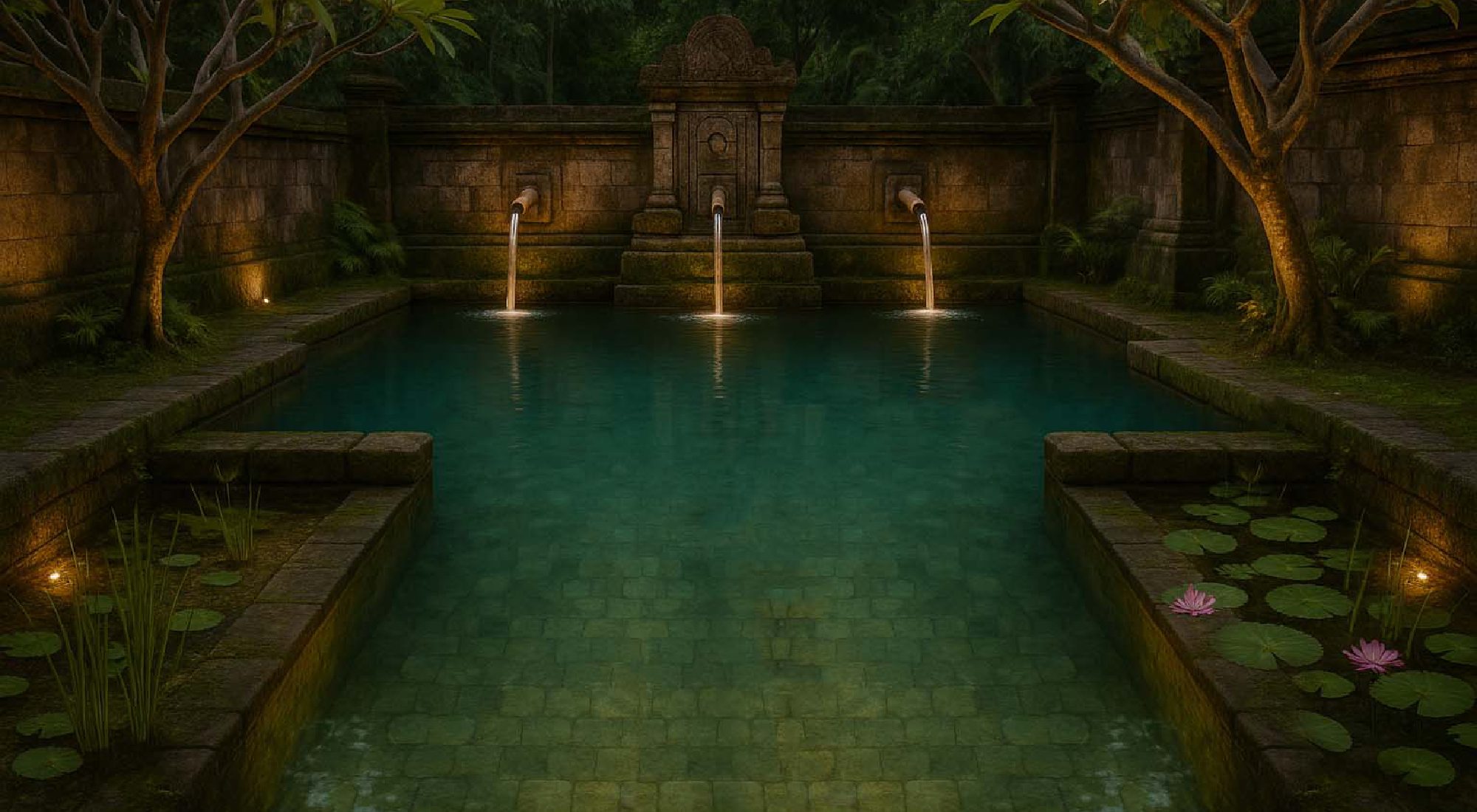
Temple Springs
Inspired by Bali’s holy water temples, this feels like a sacred water sanctuary. With symmetrical or stepped layout, traditional stonework, hints of carvings or aged ornamentation.
The idea
Temple Springs borrows the grammar of the island’s petirtaan — the bathing temples where water arrives, is held, and is used in sequence. Symmetry rather than freeform, a stepped entry rather than a ladder, stonework with weight to it, and carved detail used sparingly enough to feel aged rather than themed.
The aim is restraint. Done heavily this becomes a hotel lobby; done lightly it becomes the calmest space on a property.
How the filtration sits
The temple language suits natural filtration unusually well, because holding water in a sequence of basins is exactly what these pools already do. A planted regeneration zone reads convincingly as the upper basin — the source — with the swimming zone below it. Water arriving over a stone spout is filtration and ornament at once.
Where it works
Traditional and Joglo-style architecture, properties with existing stonework or mature compound walls, and owners drawn to Bali’s water culture rather than a resort aesthetic.
Worth knowing
This is the concept that most warrants a conversation about appropriateness. Bali’s water temples are living religious sites, not a style reference, and the line between homage and appropriation is one worth walking carefully — ideally with input from Balinese craftspeople rather than around them. We’d rather raise that at the start than have it sit awkwardly afterwards.
Good stonework also takes time. This is not the fastest of these designs to build.