
Eco Pool Design in Bali: Ideas, Costs & Local Builders
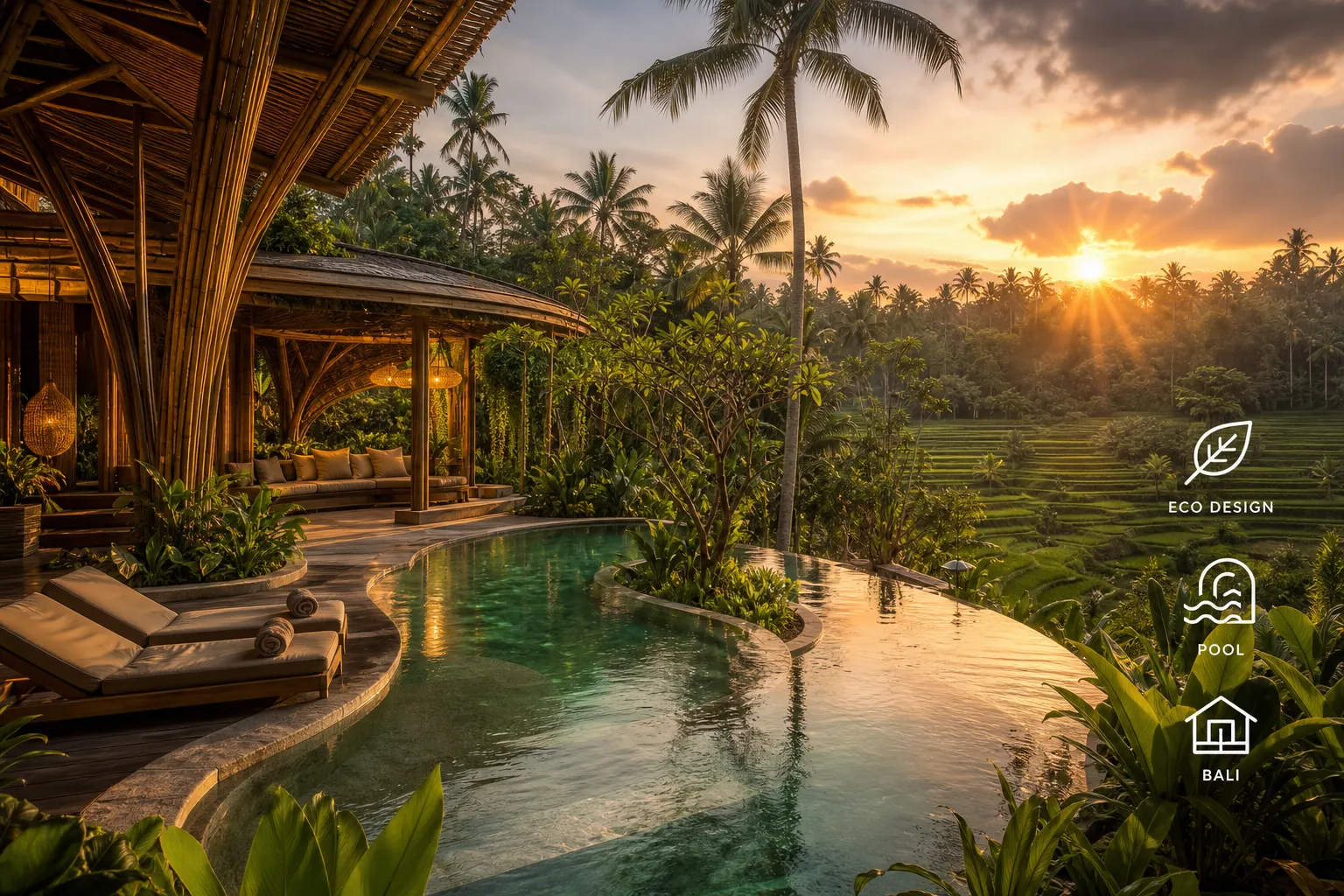
If you’re researching eco pool design in Bali for a tropical villa or resort property, you’re looking at one of the most significant shifts happening in island architecture right now. Homeowners, boutique resort developers, and short-term rental hosts across Bali are moving away from the standard tiled rectangle and toward something that genuinely belongs in a tropical landscape, pools that feel like they evolved from the garden rather than were dropped into it.
At Bali Natural Pools, we have spent years developing this philosophy and adapting natural pool concepts to Bali’s climate, materials and the way people actually live here. From chlorine-free water systems and organic freeform shapes to natural stone and coral-inspired finishes, each pool is designed to feel like it grew here. This guide covers everything you need to make a confident decision: what eco pool design in Bali actually involves, which styles work best in the island’s climate, how biological filtration keeps the water clean, what it costs in 2026, and how to find the right builder for your property.
What Makes a Pool “Eco” in Bali’s Tropical Context
The Core Principle: No Chemicals, Just Biology
An eco pool replaces chlorine with a living filtration system. Water circulates continuously through a planted regeneration zone where gravel, lava rock, beneficial bacteria, and aquatic plant root systems do the work that chemicals would otherwise handle. Nutrients are absorbed by plants, organic matter is broken down by microbes, and the filtered water returns to the swim zone clean and clear. In Bali’s year-round tropical climate, where pools are used regularly throughout the year and biological activity is naturally high, this system is well-suited to the environment. When correctly built and maintained, the water is comfortable for skin and eyes, and the design minimizes chemical runoff into the surrounding soil or waterways.
Design Values That Set Eco Pools Apart
The filtration system is just one part of the picture. An eco-friendly pool in Bali is also defined by its visual and material language. Organic freeform shapes replace geometric tiles. Natural stone coping, Green Sukabumi stone, and locally sourced materials take the place of synthetic pool finishes. Tropical plants frame the edges and filter zones, creating a pool that reads as part of the garden rather than a separate hard structure dropped into it. This design philosophy is what separates a natural pool from a standard pool fitted with a saltwater system. It is a fundamentally different approach to what a pool can be.
Eco Pool Design Bali: Styles That Work in the Island’s Climate
Reef-Inspired and Lagoon-Style Pools
One of the most sought-after directions in Bali’s premium property market is the reef-inspired pool: freeform edges, coral-coloured interiors, shell insets, and shapes that mimic the sensation of swimming in a natural ocean cove. At Bali Natural Pools, our Coral Cove concept is built around exactly this idea. The pool doesn’t look like a pool in the traditional sense, it looks like something you found at the base of a coastal cliff. These designs tend to photograph exceptionally well and can give villa rental owners a strong visual edge on booking platforms where first impressions carry real weight.
Tropical Garden Pools with Regeneration Zones
A second style integrates the biological filter zone directly into the landscape design. The regeneration zone becomes a lush planted border of water lilies, bulrush, cattails, pickerel rush, and tropical aquatic grasses framing one edge of the swim area. This approach, demonstrated at the Sarinbuana Eco Lodge natural pool in Tabanan, creates a pool that looks like it evolved from the surrounding garden. The swimming area and the garden feature become one continuous design. For properties with generous outdoor space, this style delivers the most immersive, nature-integrated result.
How Natural Filtration Actually Works
The Swim Zone and Regeneration Zone System
The most common question from clients is straightforward: will it actually stay clean? The answer is yes, when the system is properly designed. A natural pool operates on a two-zone model. The swim zone is where you swim. The regeneration zone is the planted biological filter, typically occupying roughly 50% of the total water surface area, where water is pumped slowly through gravel, root systems, and beneficial bacteria. Nutrients are absorbed by plants before they can feed algae. The filtered water then returns to the swim zone through a low-velocity return system that keeps circulation continuous without disturbing the swim area.
Plant Species and Filter Media for Bali’s Climate
Not all aquatic plants perform equally in a tropical environment. European natural pool guides often reference temperate species like Caltha palustris or Mentha aquatica, which don’t translate to Bali’s heat. For local conditions, the strongest performers are tropical water lilies (Nymphaea spp.) for shading and algae suppression, water lettuce (Pistia stratiotes) for nutrient uptake, cattails (Typha spp.), bulrush (Schoenoplectus spp.), and arrowhead (Sagittaria spp.) for the marginal filter zones. For filter media, graded gravel remains the core biological substrate, with lava rock used frequently in Bali-specific builds because of its local availability and exceptionally high surface area for bacterial colonization, making it a practical and effective choice for sustainable pool construction in tropical conditions.
What an Eco Pool Costs to Build in Bali in 2026
Cost Considerations for Eco Pool Design in Bali
A mid-specification natural swimming pool with landscaping in Bali runs from IDR 10–16 million per m². Premium designs with custom stonework, complex filtration architecture, and heavy tropical planting reach IDR 16–25 million per m² and beyond. To put that in practical terms: a 30m² plunge-pool style build with a compact regeneration zone sits in the IDR 300–480 million range. A 50m² full regeneration zone pool with landscaped filter borders lands closer to IDR 500 million – 1.25 billion, depending on finish quality and site complexity. Natural pools do cost more than standard pools upfront, mainly because of the regeneration zone, biological media, and plant establishment. The trade-off is that ongoing chemical costs drop to near zero.
What Drives the Final Number Up or Down
Several variables move the budget significantly. Pool surface area and shape complexity matter most: freeform organic edges require more formwork and skilled labour than rectangular builds. Interior finish materials, coping choices, and the density of tropical planting in the filter zone each add to the total. Site access and ground conditions across Bali vary considerably, and sites with difficult excavation or limited vehicle access carry a cost premium. Whether your builder designs the regeneration zone in-house or subcontracts it also affects both price and quality. The only reliable way to budget accurately is a site-specific quote from a specialist builder who works with natural and biofilter pond pool systems.
Maintaining Water Clarity Through Bali’s Seasons
Dry Season vs. Rainy Season: What Changes
Bali’s dry season, running roughly from April to October, is the simpler half of the maintenance calendar. The main tasks are monitoring evaporation, topping up water levels, and keeping the biological balance stable. The rainy season, November to March, requires more attention. Heavier rainfall dilutes the water chemistry, leaf litter input increases, and faster organic loading into the filter zone means debris removal and water testing both need to happen more frequently. Many Bali eco pool owners increase service visits to twice weekly during the wet months. Budget IDR 1.2–2.0 million per month for routine professional service, with seasonal peaks during the monsoon period.
Mosquito Prevention in a Circulation-Based System
A well-designed natural pool with continuous water circulation does not create mosquito habitat. Mosquitoes require stagnant water to breed, and a properly operating eco pool keeps water moving through the filtration circuit at all times. The practical discipline is keeping the pump running, clearing debris from skimmer baskets before it blocks flow, and eliminating standing water in nearby planters, pot saucers, and drains. After heavy rain, a quick inspection of the pool surrounds takes ten minutes and removes the main risk. This is a maintenance habit, not a chemical solution, and it works reliably when the pool’s circulation system is correctly designed from the start.
How to Choose an Eco Pool Builder in Bali
What to Look for Before Signing Anything
Natural pool construction in Bali is a specialist skill. Most standard pool contractors build chlorinated concrete pools and are not set up to design a functioning biological filtration system, the hydraulic engineering, plant selection, and media sizing require a different knowledge base entirely. Before committing to any builder, verify that their primary focus is natural or chlorine-free pool systems rather than conventional builds with an “eco-friendly chemicals” label attached. Ask to see a portfolio of freeform, organically shaped builds. Confirm that the builder designs the regeneration zone in-house rather than outsourcing it to a landscape subcontractor who may not understand the hydraulic requirements. Ask how they handle ongoing maintenance and what their handover process includes.
Why Bali Natural Pools Stands Apart in This Space
Bali Natural Pools focuses exclusively on chlorine-free, nature-inspired pools, a specialist discipline that most general pool contractors on the island don’t offer. Every project is custom-designed from the ground up: organic shapes drawn from the surrounding landscape, natural materials selected for their visual and material compatibility with Bali’s tropical environment, and biological filtration systems sized correctly for the pool volume and site. We offer a free design consultation to every prospective client, the right starting point if you want to understand what your specific property can accommodate before making any financial commitment. No templated builds, no standard rectangular plans with a plant box bolted on.
The Decision in Front of You
An eco-friendly pool in Bali is not a compromise or a niche choice. For a tropical climate where pools are used year-round, where wellness shapes how residents and guests choose to live, and where visual distinction can meaningfully improve rental appeal, eco pool design in Bali makes increasing practical sense. The biological filtration is proven in this environment. The design possibilities, from reef-inspired lagoon pools to lush garden builds with integrated filter zones, are genuinely varied and buildable. The costs are clear and plannable once you have a site-specific quote. And the maintenance, with the right setup and service team, is manageable across both dry and wet seasons.
The next step is a conversation about your specific property: the site, the space, the aesthetic you’re working toward, and what a nature-integrated pool can realistically look like there. Book a free design consultation with Bali Natural Pools to explore what eco pool design in Bali can deliver for your project.