
How Long Does It Take to Build a Custom Pool in Bali?
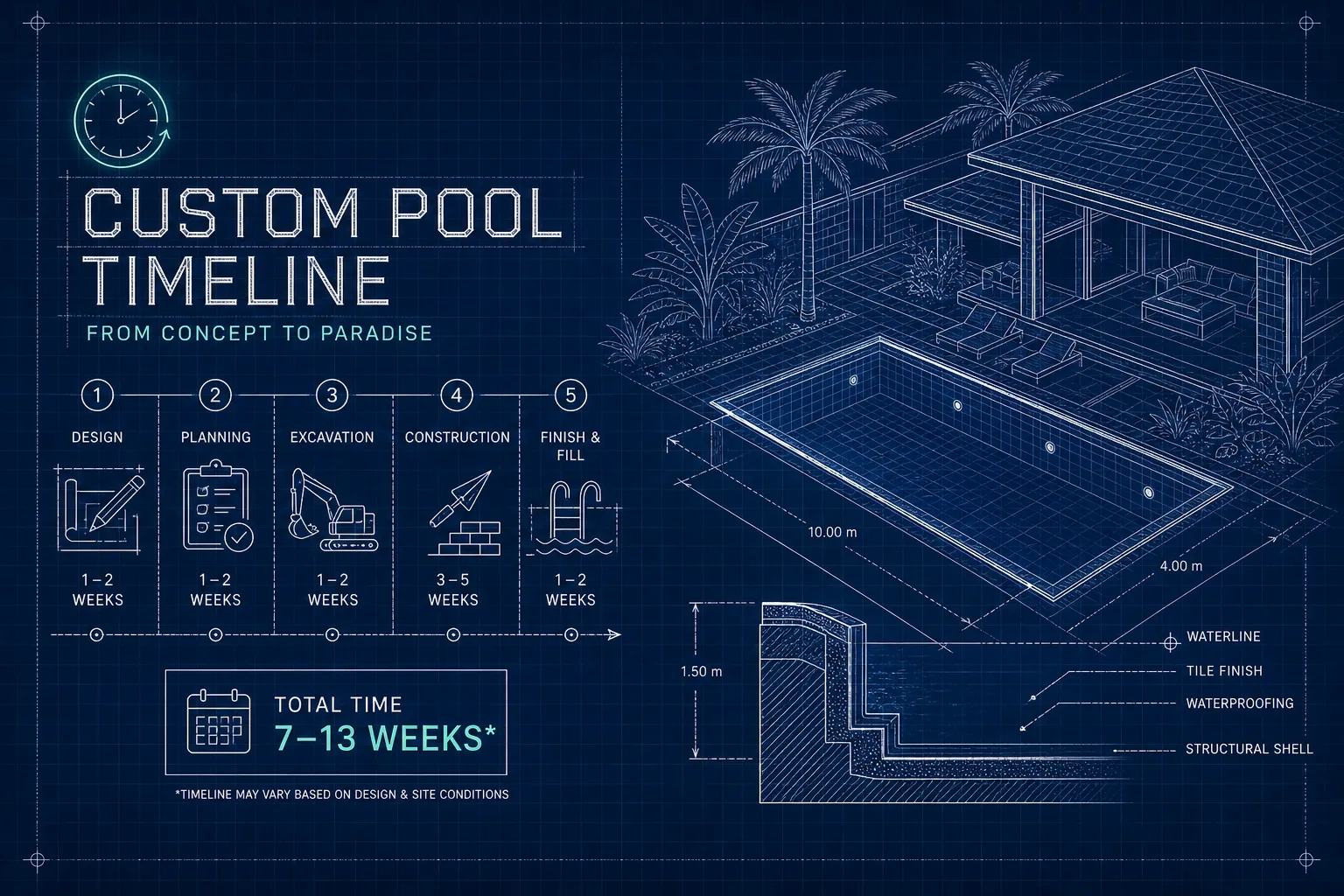
How long does it take to build a custom pool in Bali? At Bali Natural Pools, that’s the question we hear most often at the start of a first conversation, not about budget, not about design. And the honest answer is that most estimates people get before they talk to us are either vague or wildly optimistic.
A standard custom pool in Bali typically runs 10 to 16 weeks from design sign-off to water-in. That range exists for real reasons, and understanding what drives it makes the difference between a build that finishes on schedule and one that drags into the next wet season. After seven years building on this island, I’ve seen both outcomes. The difference almost always comes down to decisions made before a single shovel breaks ground.
This article walks through every phase of a custom pool build, from the first design consultation to water system handover. It covers the specific factors that stretch schedules, the ones that protect them, and five concrete moves you can take right now to keep your build on time.
How long does it take to build a custom pool in Bali: the realistic timeline
Before getting into phases, here’s the top-line answer: most custom pools in Bali take between 10 and 16 weeks end-to-end. That number covers design approval through to a filled, commissioned pool ready for use. Where your project lands within that range depends almost entirely on how the pre-build phase is managed.
Standard custom pools: the 10 to 12 week reality
A straightforward concrete or natural pool with a clean design brief and locally available materials typically runs 10 to 12 weeks from the point design is approved. This assumes permits are moving in parallel, dry season conditions prevail, and no major design changes happen mid-build. “Simple” doesn’t mean cookie-cutter here. It means design decisions are locked in early, which is what allows construction to move without interruption.
Complex and bespoke designs: planning for 14 to 20 weeks
Reef-inspired freeform shapes, imported tile finishes, chemical-free natural water systems, and deep excavation on sloped terrain all add time. The reason design complexity compounds the schedule is straightforward: more engineering review, longer material lead times, and more coordination between trades. A bespoke pool isn’t slower because it’s harder to build. It’s slower because every unique element creates dependencies the team has to sequence correctly. The total timeline is less about the pool itself and more about how well the pre-build phase is managed.
The six phases of a custom pool build in Bali
Design consultation and concept approval (weeks 1 to 2)
The first two weeks cover site assessment, brief development, and initial concept sketches. This is where you define the pool’s shape, depth, water system type, and finish direction. Getting the brief right here saves weeks downstream, every change to a design after ground is broken costs significantly more time than the same change made on paper. At Bali Natural Pools, the initial consultation is designed to remove that barrier: you get a clear picture of what’s possible on your specific site before committing to anything.
How long does it take to build a custom pool in Bali, permits and approvals (weeks 2 to 8)
This is the phase that surprises people most. Private pool construction in Bali requires approvals from several bodies. DPMPTSP handles the application workflow. Dinas PUPR conducts the technical building review, and submissions run through SIMBG, the national online permit system. Depending on zoning, DLH may also be involved if an environmental review is triggered.
A clean residential file with complete documentation typically moves through in 4 to 6 weeks, though complex villa or pool projects with difficult zoning, incomplete documents, or sloped sites requiring significant excavation can stretch to 8 to 12 weeks, and in some cases longer. Starting permit preparation in parallel with design finalization is one of the most effective schedule protections available to you. Builders who treat permits as something to think about after design is done can easily cost you several weeks of avoidable delay.
Excavation and structural work (weeks 6 to 11)
Once permits are cleared and the site is set out, excavation begins. This phase covers earthworks, formwork, steel reinforcement, concrete pours, and curing time. For a standard pool shape on flat ground, excavation takes 1 to 5 days. Sloped terrain or rock takes longer and often requires machinery changes mid-dig.
Curing is non-negotiable: structural concrete needs a full 28 days to reach design strength. Shortcuts here don’t save time. They create structural problems that surface later and cost far more to fix. Rain is the other variable to manage during this phase. Excavation on saturated soil can collapse the dig, and fresh concrete pours need dry conditions to cure correctly.
Finishing and water system setup (weeks 11 to 16)
This final phase covers waterproofing, interior finishes (tiles, plaster, or natural materials), coping, pool deck, plumbing connections, and equipment installation. For natural pools specifically, the water system setup includes bio-filtration or mineral system commissioning, which requires proper balancing before handover. Rushing this stage compromises the water quality the client paid for. Finishing stages are commonly delayed by late delivery of imported or custom materials, if materials aren’t on-site before this phase starts, the build stalls while the crew waits.
What causes delays and how long they actually add
Bali’s rainy season: plan a buffer, not a panic
Bali’s rainy season runs roughly November through April, with the wettest stretch concentrated in December through February. Weather delays during this period typically add days rather than months, but they compound. A realistic planning buffer for outdoor stages during wet season is 1 to 2 extra weeks. Excavation, concrete pours, and drainage work are the most sensitive stages. Finishing work indoors is far less affected.
The practical advice is simple: builds that start in May or June complete their structural phases during peak dry season with minimal friction. If a wet-season start is unavoidable, build an explicit weather buffer into the excavation and concrete schedule from the beginning.
Material lead times: the hidden schedule killer
This one catches more projects than weather does. Local-stock items like sand, aggregate, and basic fittings arrive in 1 to 4 weeks. But the materials that make a custom pool distinctive almost always take longer:
-
Custom or imported tiles: 6 to 12 weeks from order to site
-
Specialty pumps and filtration equipment: 6 to 12 weeks if sourced from outside Indonesia
-
Stainless components and imported pool hardware: 8 to 16 weeks from offshore suppliers
-
Natural water system components for chlorine-free pools: allow the longer end of any range
The lesson: procurement has to start before excavation begins, not after. Ordering long-lead materials at the same time permits are filed keeps the supply chain moving in parallel with the build.
Design changes mid-build: the most controllable delay
Every design revision after groundbreaking restarts coordination between the architect, engineer, and contractor. A single structural change can add anywhere from several days to a few weeks depending on scope. Two or three changes compound fast and can push a 12-week build past 16 weeks without anyone making a single mistake. The design consultation phase exists to explore ideas. Once excavation starts, the brief is fixed.
How a structured build process protects your schedule
Why the pre-build phase is where most time is won or lost
Early pre-build decisions and front-loaded permit and procurement work strongly influence total schedule outcomes. A builder with a structured onboarding process front-loads the decisions that cause delays when left until later: site assessment, brief lock-in, permit prep, and procurement timeline. There’s a meaningful difference between a contractor who builds to spec and a specialist who manages the full build journey from first conversation to final handover.
From design consultation to final handover: what a clear process looks like
At Bali Natural Pools, the process starts with an initial design consultation where the brief, site conditions, and timeline are mapped together before any commitment is made. From that first conversation, a structured sequence runs through concept approval, permit filing, phased construction, and final handover with the water system commissioned and balanced. When a builder can tell you in the first meeting exactly what happens in week three and week eleven, that’s evidence they’ve done this before and have built a process designed to protect your schedule, not just their own workflow.
Five moves to keep your Bali pool build on time
These five actions are within your control regardless of which builder you choose. Apply all five and you eliminate the most common causes of schedule overruns before they start.
Time your start date around the dry season. Aim for a May or June start so the structural phases complete during the most build-friendly months. If a wet-season start is unavoidable, negotiate an explicit weather buffer into the excavation and concrete schedule as a contractual item. Skipping this buffer is how builds quietly slip by three or four weeks before anyone notices.
Lock the design before breaking ground. Set a hard design freeze date as part of the contract. Use the design consultation phase to explore every idea. Once excavation starts, the brief is fixed and changes go through a formal variation process with time and cost implications clearly stated upfront. Without that freeze date, scope creep becomes the default setting.
Place material orders before the permits are issued. Don’t wait for permit approval to order long-lead items. Start sourcing imported tiles, specialty equipment, and natural water system components in parallel with the permit process. For imported pool equipment, order at least 10 to 12 weeks before planned installation. The materials that define a custom pool are rarely the ones sitting in a local warehouse.
Choose a builder with a permit-ready documentation process. Ask prospective builders directly: how long do your permits typically take, and what documents do you prepare as standard? Builders who have a complete permit package ready from the start move significantly faster through the approvals process. This single question quickly reveals which contractors have the process in place, and which ones don’t.
Get a phase-by-phase schedule in writing before signing. A contract that lists deliverable milestones by phase gives you visibility and accountability throughout the build. A total completion date alone tells you nothing about whether week seven is on track. Milestones do. If a builder can’t produce a phased schedule before signing, that’s useful information too.
The timeline is yours to control
So how long does it take to build a custom pool in Bali? For most residential projects, you’re looking at 10 to 16 weeks. The spread comes down to decisions made before the build starts, not during it. Permits, materials, and design changes are the three biggest timeline risks, and all three are manageable with the right builder and a structured process behind them.
If you’re still in the planning stage, the smartest first step is a conversation with a builder who can map the timeline around your specific site and design vision. At Bali Natural Pools, that’s exactly what the initial design consultation is for: no commitment, no pressure, just a clear picture of what your build will involve, how long it will take, and what needs to happen first. Book a consultation and walk away with a timeline you can actually plan around.